Trezor Bridge Download & Setup: Securely Connecting Your Hardware Wallet
Trezor Bridge is an essential component if you want your Trezor hardware wallet to communicate safely and reliably with your computer, web browser, or crypto‑management applications. It serves as a secure local “bridge” between your hardware device and the wallet/web interface — without exposing private keys to the internet. Trezr Bridge Docs+1
✅ Why You Need Trezor Bridge
While some browsers support direct USB‑to‑device communication (via WebUSB), Trezor Bridge ensures broader compatibility across different operating systems and browsers. It acts as a background service on your machine, translating communication between the browser (or wallet app) and your Trezor device. Crucially, Bridge never touches private keys or seeds — all cryptographic operations (like signing a transaction) happen on the hardware wallet itself. Trezor Bridge+2Bridge Terezor+2
🌐 Where to Download
Always download Trezor Bridge from the official source: the Trezor website. Use the address trezor.io/bridge to ensure you’re getting the genuine, official installer. Downloading from third‑party sites or unknown links can expose you to malware, phishing, or spoofed software. Trezr Bridge Docs+2Trezor Bridge+2
🖥️ Supported Systems
Trezor Bridge supports all major desktop platforms:
Windows (Windows 10 / 11 and newer) Trezor FAQ+2Trezor Bridge+2
macOS (macOS 10.14+ / newer) Trezor Bridge+1
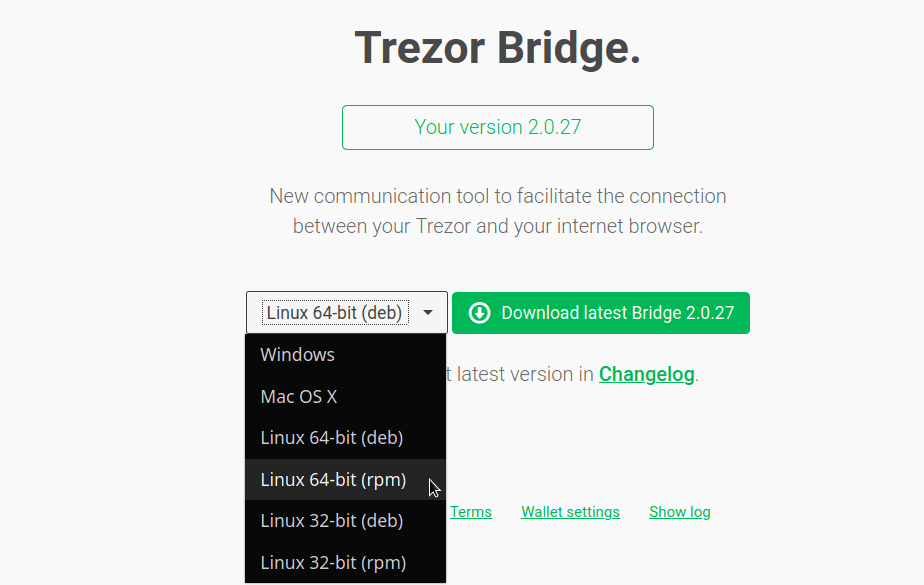
Linux distributions (Ubuntu, Debian, Fedora, Arch, etc.) — installer via
.deb/.rpm/ AppImage or package manager. Trezor Help Center+2Trezor FAQ+2
🛠️ Installation Steps
Here’s how to install Trezor Bridge:
Visit trezor.io/bridge and choose the installer for your operating system. Trezor Bridge+1
Run the installer and follow on-screen instructions:
On Windows: run the
.exe/.msi, grant required permissions, and complete the wizard. Trezor FAQ+1On macOS: open the downloaded
.dmg, drag Bridge to Applications, and — if prompted — allow permissions in System Preferences → Security & Privacy. Trezor Help Center+1On Linux: install the package (e.g. with
dpkgor via package manager), or make the AppImage executable and run it. For some distributions you may need to set USB permissions via udev rules. Trezor FAQ+1
After installation, restart your browser (if it was open) to ensure it detects Bridge properly. Trezor Help Center+1
Connect your Trezor hardware wallet via USB, then open your wallet interface (e.g. Trezor Suite or a supported web wallet). The software should automatically detect Bridge and your device. Trezor Help Center+1
🔐 Security & Best Practices
Only download Bridge from the official site (trezor.io). Verifying digital signatures or checksums — if available — adds an extra layer of safety. Trezor Bridge+1
Bridge runs locally (usually listening on
localhost) and never transmits private keys or seed phrases to the internet. All signing happens directly on the Trezor device. Trezor Bridge+2Bridge Terezor+2Always confirm any transaction, address, or action directly on your hardware wallet screen — not just on your computer. That way you avoid phishing or tampering. Trezor Bridge+1
Keep Bridge, Trezor Suite (if used), and device firmware updated — updates often include improvements, bug fixes, and security patches. Bridge Trezr+1